Luxury travel is a considered, emotional, high-value purchase, and almost no one books a $40,000 itinerary the first time they encounter an advisor. They browse, imagine, get pulled back into daily life, and drift away — unless you stay in front of them. Retargeting is the quiet engine that recovers those warm prospects and turns idle interest into booked trips. Most advisors run it as an afterthought, if at all, leaving their most valuable would-be clients to forget them. Here is how to do it properly in 2026.
Why do luxury travel advisors need a retargeting strategy in 2026?
Because affluent travelers research extensively and rarely convert on first contact, so the advisor who stays visible during that long consideration wins the booking. A prospect who reads about a safari or a villa once is interested but not ready, and without retargeting that interest simply evaporates. Retargeting keeps your itineraries, expertise, and service in front of people who already engaged, capturing bookings that a single ad impression never could. For a business built on high-value, high-consideration trips, it is one of the highest-ROI investments available.
What does an effective retargeting funnel look like for travel?
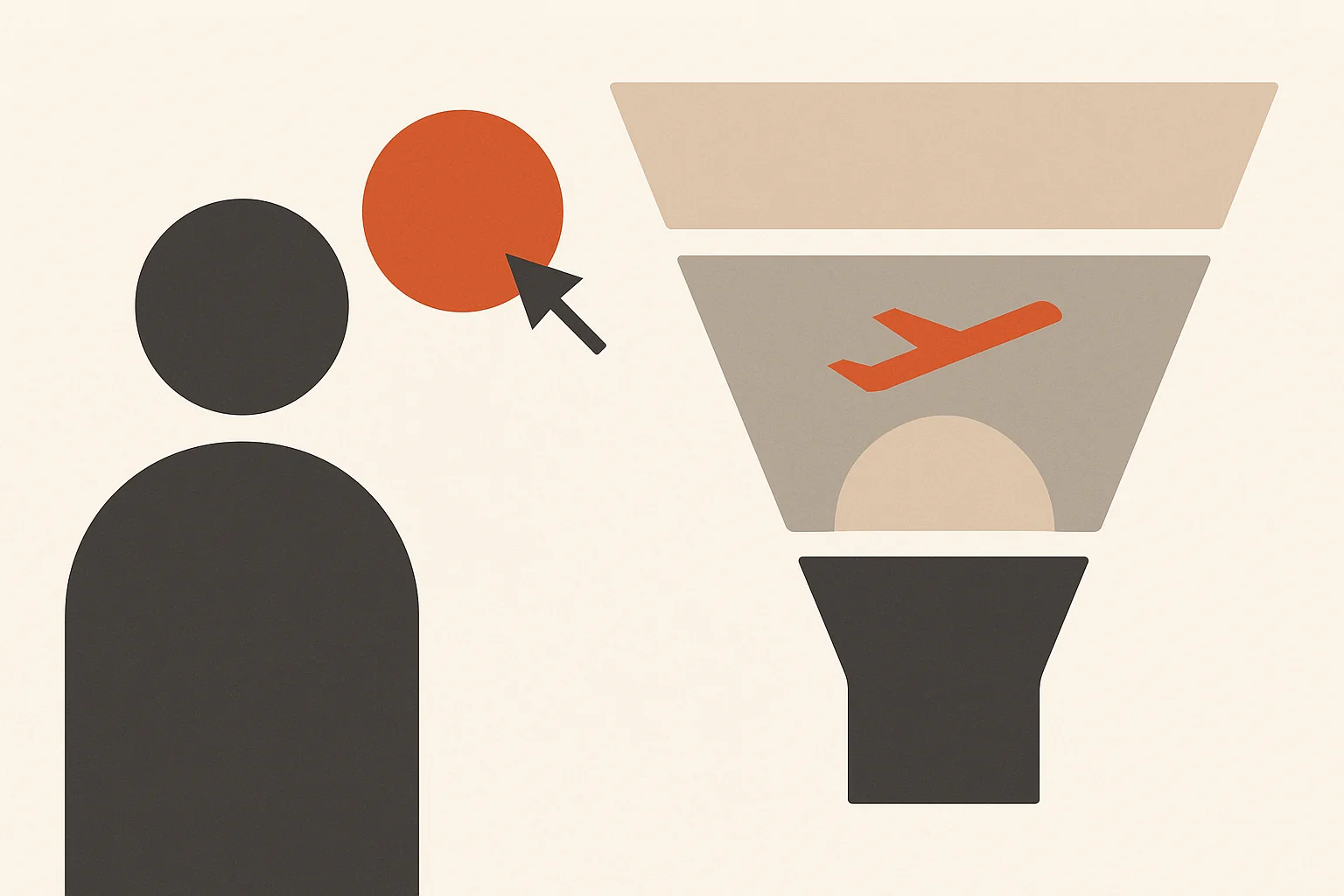
An effective funnel moves a prospect from first awareness to inquiry through a sequence of tailored touches matched to their level of interest. Someone who merely visited your site sees content that builds desire and trust; someone who viewed a specific destination sees that trip and a reason to inquire; someone who started an inquiry gets a nudge to finish. Each stage speaks to where the traveler actually is, guiding them gently toward a conversation rather than blasting the same ad at everyone. The sequence, not a single ad, is what converts.
| Audience segment | Message | Goal |
|---|---|---|
| Site visitors | Lifestyle and expertise | Build desire and trust |
| Destination viewers | That trip, deeper detail | Drive an inquiry |
| Inquiry starters | Reassurance, next step | Complete the inquiry |
| Past clients | New trips, exclusivity | Repeat bookings |
How do you segment retargeting audiences?
You segment by engagement depth and destination interest, so each traveler sees creative relevant to what they actually explored. Separate audiences for general site visitors, viewers of specific destinations or trip types, people who began an inquiry, and past clients let you match message to intent precisely. A honeymoon researcher and a family-safari researcher should not see the same ad, and someone who abandoned an inquiry deserves a different nudge than a first-time visitor. Thoughtful segmentation makes Meta Ads retargeting feel like tailored service rather than generic pursuit.
What creative works for retargeting affluent travelers?
Aspirational, immersive creative that rekindles the feeling of the trip works best, paired with subtle proof of your expertise and exclusivity. Rich video and imagery of the destinations they explored reignite desire, while testimonials, unique access, and the promise of a bespoke, handled-for-you experience reassure a discerning traveler that you are the advisor to trust. Avoid discount-led messaging, which cheapens a luxury brand; instead sell the experience, the ease, and the access. The goal is to make the prospect feel the trip again and see you as the person who can deliver it flawlessly.
How long should the retargeting window be?
Use a longer window than most industries — often 30 to 90 days or more — because luxury trips are planned far ahead and decided slowly. A prospect might research for months before booking a milestone anniversary or a multi-week expedition, so cutting them off after a week wastes the warm audience you paid to build. Match the window to your typical planning cycle, keep frequency comfortable so you stay present without becoming intrusive, and let the sequence breathe across the long timeline these decisions naturally take.
How do you measure retargeting ROI?
You measure it by booked trips and revenue attributed to retargeted audiences, not by clicks or impressions. Track how many inquiries and bookings come from people who were retargeted, and weigh the spend against the value of those high-ticket trips, which is where the return reveals itself. Because a single recovered booking can be worth tens of thousands, retargeting often shows the strongest ROI of any channel when measured correctly. This outcome-focused measurement is the discipline behind all effective luxury travel marketing.
In luxury travel the first ad plants the dream and the retargeting sequence books it — the advisor who disappears after one touch loses the trip to the one who stayed.
Retargeting is not an add-on for luxury travel advisors; it is how the long, emotional booking decision is actually won. Segment by engagement, serve immersive creative that rekindles desire, extend the window to match the planning cycle, and measure by booked trips. Do that and you recover the affluent prospects your competitors let slip away in 2026.
People Also Ask
Why is retargeting important for luxury travel advisors?
Because affluent travelers research at length and rarely book on first contact. Without retargeting, that early interest evaporates. Retargeting keeps your itineraries and expertise in front of people who already engaged during their long consideration period, recovering high-value bookings that a single ad impression could never capture on its own.
How do you segment retargeting for travel?
By engagement depth and destination interest: general site visitors, viewers of specific destinations or trip types, people who began an inquiry, and past clients. Matching creative to what each traveler actually explored makes retargeting feel like tailored service, so a honeymoon researcher and a family-safari researcher see relevant, distinct messages.
How long should a luxury travel retargeting window be?
Often 30 to 90 days or more, longer than most industries, because luxury trips are planned far ahead and decided slowly. Cutting prospects off after a week wastes the warm audience. Match the window to your typical planning cycle and keep frequency comfortable so you stay present without becoming intrusive.
How do you measure travel retargeting ROI?
By booked trips and revenue attributed to retargeted audiences, not clicks or impressions. Track inquiries and bookings from retargeted prospects and weigh spend against the value of those high-ticket trips. Because one recovered booking can be worth tens of thousands, retargeting often shows the strongest ROI of any channel when measured properly.